THE ETHNO-VILLAGE SERBIA
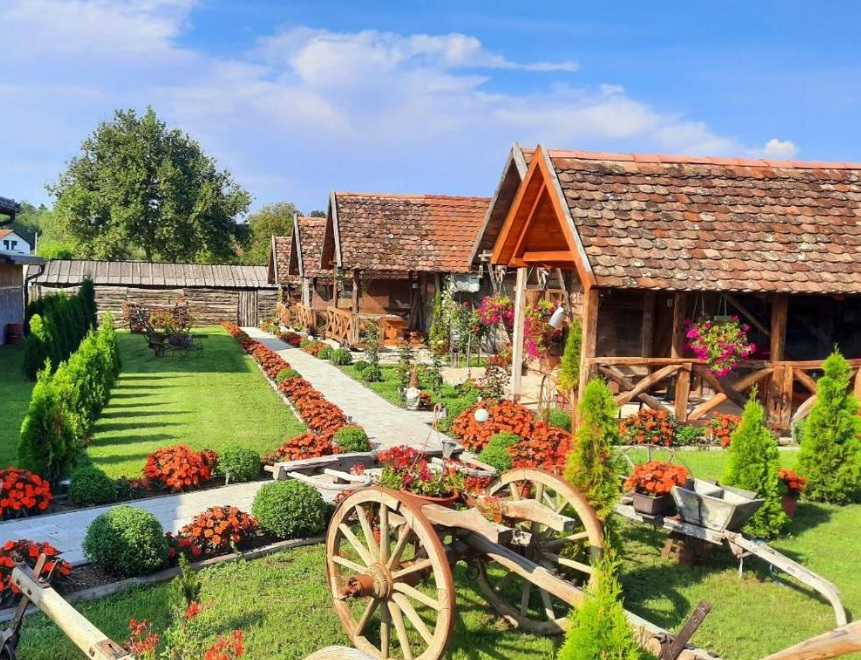
The Ethno-villages in Serbia are spaces in which a perfect combination of an authentic traditional ambience, modern facilities, peace, and numerous activities is achieved.
Rural tourism is an increasingly popular area in Serbia. Its great advantage is its diversity. Mountain ethno-villages in the south, for instance, differ in many ways from those in the north in Vojvodina. Each of them carries its own special story and conveys the spirit and atmosphere, beauties, and the most significant attractions of the region in which it is located. Ethno-villages throughout Serbia best preserve the memory of life in the past, the culture, and the customs of the region in which they are located.
Content that ethno-villages provide
Besides the clean and fresh air, ethno-villages provide to visitors:
PURE NATURAL AMBIENCE
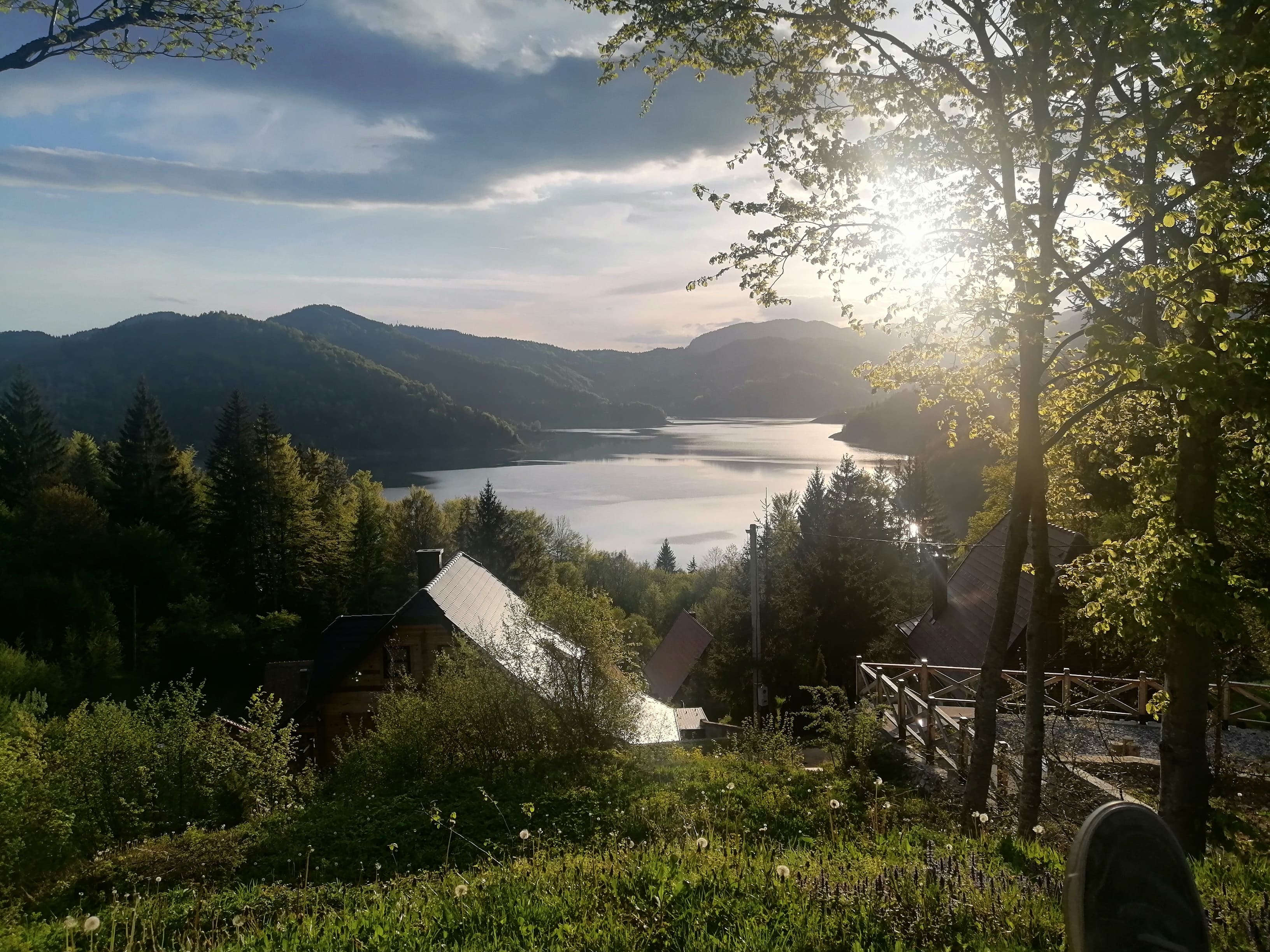
- The ethno-villages are mostly situated in a beautiful natural settings: near streams, lakes, rivers, hills and mountains, and forests, providing walks in nature.
- Some of the villages are home to domestic animals, which bring children lots of fun. Children can feed animals, ride horses, fish, etc. …
- These properties comprise lots of plants, including healthy herbs, orchards, vegetable gardens…
TRADITIONAL SERBIAN DISHES
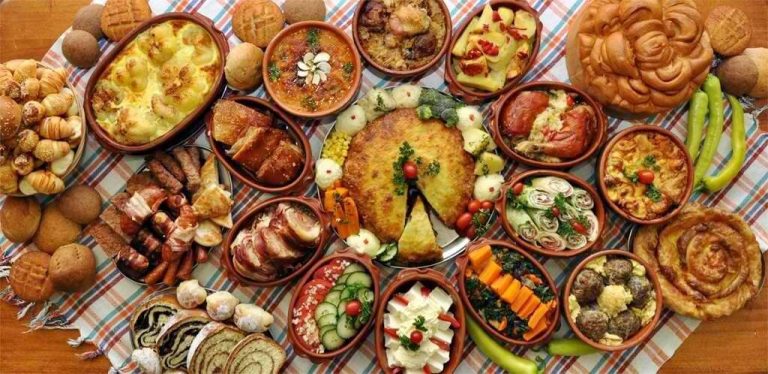
- An important part of the village offer are restaurants with often locally produced food and beverages. You are able to taste traditional Serbian dishes prepared in an old-fashioned way: under the grate, for instance, or at an outdoor barbecue.
- Appetizers consist of: domestic cheese, “kajmak”, “ajvar”, “čvarci”, meat products, domestic pies like “proja” or “gibanica”…
- Main dishes: “Karadjordjeva” steak, barbecue: “ćevapi” or “pljeskavica”, sausage, “gulaš”, “sarma”, “podvarak”
- Desserts: “orasnica” (nut cookie), various fruit pies, strudels, “vanilice” (vanilla cookies), “salčići”, etc.
LEARN MORE ABOUT SERBIAN MOST FAMOUS AND POPULAR CUISINE … ↓
KAJMAK – Kajmak is a creamy dairy product with a pleasant sour taste, obtained by collecting fat from the surface of boiled and cooled milk. It is traditionally made in the Balkans, and the city of Užice’s Kajmak is especially famous, which is on the list of intangible cultural heritage of Serbia. Kajmak is used as a spread or as an ingredient in various dishes.
AJVAR – Ajvar or hajvar is a special type of salad, a specialty of Balkan cuisine, made from red peppers. Ajvar is originally from Serbia and is also called “Serbian salad” or “Serbian vegetable caviar.” It is used as an addition to many dishes, most often as a bread spread. Eggplant is most often added to the peppers. A salad made only from eggplant is called “malidžano,” while a salad made from a mixture of peppers and eggplant is often called “pinđur,” although terms are sometimes used interchangeably for their mixture.
ČVARCI – “Čvarci” are a traditional dish obtained by frying pork fat, primarily bacon. During cooking in a cauldron, the fat is melted and strained, while the leftover meat and fat are fried and dried until crisp. Pork rinds are served as an appetizer or as an addition to other dishes, and a specific variant is “duvan” čvarci, which are fried for a long time until all the fat is extracted. This is a special variant, especially popular in western Serbia (the city of Valjevo), where the frying process is prolonged until all the fat is extracted. The remains resemble finely chopped tobacco, which is how they got their name.
PROJA – Proja, moruznica, or proha is a cornbread. Proja is made from coarsely ground cornflour, salt, and water. In southeastern Serbia, proja is known as “moruznica” and is part of the “Gastronomy of the Pirot Region.” Proja is an important part of Serbian cuisine, where it is served as an appetizer. If additional ingredients are added, like for instance wheat flour, then it is called “Projanica” or “Projara.”
GIBANICA – Gibanica is a type of Serbian layered pie, usually filled with white cow’s milk cheese, oil, and eggs, or less often, instead of cheese, with meat, potatoes, or spinach. It differs from a pie in that it has slightly thicker crusts. The layers of crust and filling can be arranged flat, or more often as wrinkled crusts soaked with filling with a flat crust on the bottom and top (this variant is called “gužvara”). The largest gibanica was made in the city of Mionica and was witnessed by Guinness World Records officials.
AUTHENTIC ACCOMMODATION
- Some of the villages can offer you a stay in their authentically equipped accommodation. Ethnic village homes look very similar to traditional Serbian houses from the past.
- Old Serbian houses were made of natural materials, like wood and stone, but also not infrequently with mud and straw.
- Each region had its own style of construction, so the following types of houses were identified: “moravska”, “vojvođanska”, “dinarska”, and “šumadijska”, based on the geographical locations where they were present and frequent.
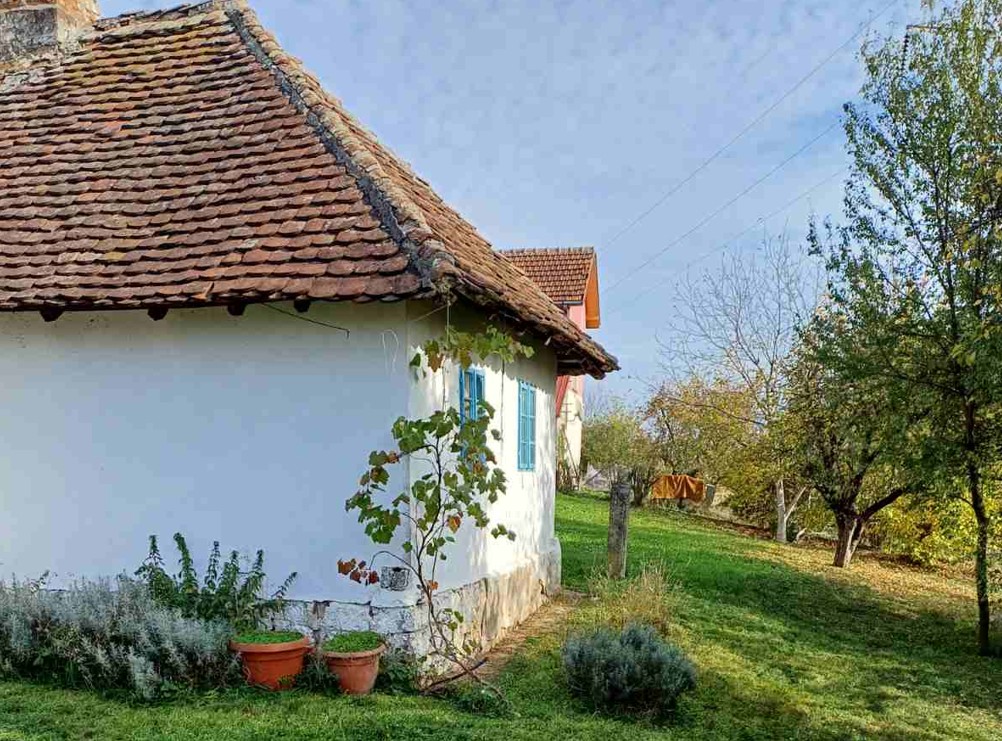
LEARN MORE ABOUT SERBIAN TYPES OF HOUSES … ↓
VAJAT – A vajat is a traditional auxiliary building in rural households in Serbia. It is most often built completely of wood, small in size, and without windows. Although it mainly served as a storage room for tools, equipment, or agricultural products, its primary and most significant historical function was to provide privacy for a married couple, especially newlyweds, within the traditional large family household.
SALAŠ – A Salaš is, in a broader sense, a rural household with a main house and auxiliary objects like stables, barns, and verandas, and in a construction sense, a traditional type of Pannonian (Vojvodina) dwelling house. The word “salaš” itself comes from the Hungarian word “szállás” (in Serbian “smeštaj” or English “accommodation”).
MAJUR – In its essence, a “majur” was a large agricultural estate or farm, similar to a salaš, but in a historical context often larger and richer. The word is also of Hungarian origin (major), but comes from the German Meierhof (manager’s estate).
KOLIBA -A hut is a type of house made of wood or similar materials in which people once lived, and some still do. In such a structure, a person is somewhat protected from animals and the weather.
BRVNARA – A log cabin is a building made exclusively of tree trunks—logs or hewn logs. Log cabins are houses and stables, shelters and protection for people, livestock, and agricultural products. They house grain mills, windmills, and various other necessary tools and machines. Log cabins are also churches. In the past, they were houses for living or an overnight stay in the forest. Many log cabins have survived to this day.
AMBAR – A barn or granary is a building whose primary purpose is to store grain or animal feed. It is most often built with an entrance at a higher height to prevent access by mice and other vermin. Granaries were characteristic of agricultural areas and rural households.
AT THE FOLLOWING LINKS, YOU WILL FIND: 27 ETHNO-VILLAGES WITH ACCOMMODATION
6 ETHNO-VILLAGE RESTAURANTS
(AND STILL GROWING) ↓
SERBIAN ETHNO–VILLAGES WITH ACCOMMODATION PLACED ON THE MAP (IN ALPHABETICAL ORDER)
SERBIAN ETHNO–VILLAGE RESTAURANTS PLACED ON THE MAP (IN ALPHABETICAL ORDER)
WHAT DOES THIS MAP PROVIDE?
- This map will show you the location of authentic Serbian villages, where you can spend a nice time with your family and friends, have delicious meals, rest in a natural and refreshing ambiance, and learn about rich Serbian history.
“In this area, in recent times, traditional housing has been avoided. Then nature came full circle and established that of all the materials that man has used throughout the centuries, the best is natural. It has the least radiation; it is the healthiest. I restored everything that is valuable in that tradition, and these are old wooden houses, which have been renovated from the inside, and which can last another 100 years. On the one hand, I restored the tradition, and on the other, I fulfilled the aesthetic and protective requirements…”
by Emir Kusturica, Serbian awarded movie director
Quote about the construction of an ethno-village